












Close the gap between plant reality & capital decisions

PHOENIX Unified Intelligence connects plant reality, work execution, energy burden, and whole-of-life cost — so you can make better operating decisions now and better capital decisions next.

The Evolution of Planning

Most systems tell you what was planned. PHOENIX helps you decide what is actually right now — and what is economically right next.

What PHOENIX connects

Three decisions PHOENIX improves

One core promise, supported by four practical proof points

Built for teams that already have systems, but still lack one operating answer they trust for execution and capital decisions.

01

Close the gap between plant reality and capital decisions

Stop overthinking and feeling mentally exhausted. Learn how to understand your thoughts and create inner calm.

02

Work execution visibility

Connect risk and plant context to work orders, PM state, assignment, and handheld coordination so teams know whether action is actually moving.

03

Repair-versus-replace clarity

Use whole-of-life cost, energy burden, reliability exposure, and renewal ROI to improve asset decisions with a clearer, justifiable method.

04

Performance monitoring across systems

Monitor ERP assumptions, CMMS status, logistics signals, and control-system performance — without replacing the systems you already run.

05

Visible budgeting method

Use the performance matrix to support defer, optimize, repair, or renew decisions with clearer capital timing your team can actually explain.
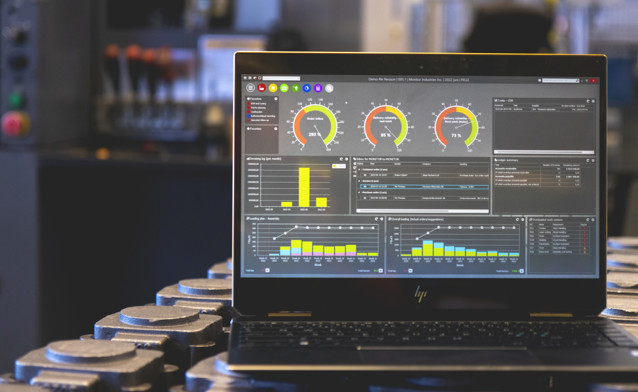
AI-powered industrial intelligence platform connecting plant operations data with strategic capital decision making

Plain-language outcomes, not abstract software claims

PHOENIX helps teams see performance drift earlier, make better repair-versus-replace calls, and connect work status to operational risk.

Everything you need to make better decisions, connected

Six core capabilities designed around the execution gap and the CAPEX management gap — not just data visibility.

See Performance Drift Earlier

Monitor ERP assumptions, CMMS status, logistics signals, and control-system performance against expected outcomes — before drift becomes a problem.

Know Whether Work Is Moving

Use Maximo or MaintainX visibility to understand assignment, PM status, and execution response in context of plant operations and risk.

Better Repair-vs-Replace Calls

Frame asset decisions using energy burden, lifecycle cost, reliability risk, and expected renewal value in one unified performance matrix.

Justify Capital Timing

Support defer, optimize, repair, or renew decisions with a visible performance matrix tied to operational truth — not gut feel or partial data.

Connect Work Status to Risk

Attach plant impact, schedule risk, and asset criticality to work-order execution and PM communication so teams know what actually matters.

Reduce Energy-Blind Decisions

Treat energy burden as part of whole-of-life cost — not as a separate utility number — so lifecycle economics inform every asset and capital decision.

A performance matrix for repair, renewal & budgeting decisions

Combines operating burden and capital urgency so teams can decide whether to defer, optimize, repair, or renew with more confidence.

Matrix Inputs

Live plant context, work execution status, energy burden, lifecycle cost, reliability exposure, lead-time risk, and asset renewal ROI.

Horizontal axis

Operating burden — energy, wear, backlog pressure, process instability, service risk.

Vertical axis

Capital urgency — renewal need, defer risk, lead times, spares exposure, business impact.

Optimize & Stabilize

Use operational changes, PM discipline, assignment visibility, and energy reduction before committing major capital.

Renew or Replace

Move toward renewal when energy burden, reliability exposure, and lifecycle cost together make continued operation the wrong economic choice.

Turn plant insight into work-order visibility and action ownership

PHOENIX connects to IBM Maximo and MaintainX so teams can see assignment, PM activity, communication, and response status in the same decision flow.

CMMS Work-Order Integration

Connect risk, asset condition, and plant context to work orders in Maximo or MaintainX — open, assigned, overdue, or unresolved at a glance.

Group or User Assignment

Route work by crew, craft, supervisor, area, or named user so the right issue gets owned quickly and visibly — no more lost work orders.

PM Management Communication

Preventive maintenance schedules, completion state, exceptions, and communication — brought into one unified execution view.

Handheld Chat & Field Coordination

Frontline communication around work execution so technicians, operators, and supervisors can respond with better plant context.

Closed-Loop Response Visibility

Work-order status and field response feed back into both plant decisions and capital decisions — creating a truly closed intelligence loop.

Operational Context in the Work

Schedule risk, energy burden, and asset criticality are attached to each work order so teams understand why the action matters right now.

Why this is different from adding more dashboards

The value is not another screen. It is cross-system correlation, execution visibility, and a clearer method for repair-versus-replace and capital timing.

Without PHOENIX

More data, same uncertainty

With PHOENIX

One Clearer Operating Answer

Start with one proof of value and measure the decision improvement

The fastest way to justify PHOENIX is to focus on one area where execution risk, work-order visibility, energy burden, or repair-versus-replace decisions are already costing you.

Define the Decision Gap

Choose the problem that matters most: schedule confidence, assignment visibility, repair-versus-replace quality, or capital timing. Start focused.

Connect the Truth

Bring together ERP, CMMS/EAM, plant performance, work-order status, and lifecycle economics so teams can see where decisions are breaking down.

Measure the Result

Track earlier risk detection, clearer work ownership, lower energy burden, better repair-versus-replace calls, and stronger renewal timing.

Questions buyers usually ask first

Direct answers to the most common questions about PHOENIX, integrations, and how to get started.

What makes PHOENIX different from dashboards or reporting tools?

PHOENIX connects plant reality, work execution, energy burden, and whole-of-life cost so teams can make better operating and capital decisions. It is built around the execution gap and the CAPEX management gap — not just data visibility. Most tools give you another screen. PHOENIX gives you a clearer method.

No. PHOENIX integrates with ERP, CMMS/EAM, logistics signals, and plant control-system data as inputs for agentic monitoring against performance. It does not replace warehouse systems, PLCs, DCS, or logistics platforms. It adds a decision layer across them.

Yes. PHOENIX connects to CMMS and EAM systems such as IBM Maximo or MaintainX so work-order status, assignment, PM activity, and execution communication become part of the decision process — not a separate system to check.

PHOENIX supports repair-versus-replace decisions, capital timing, energy-aware lifecycle prioritization, critical spares strategy, and asset renewal ROI using a visible performance matrix tied to operational reality — giving teams a clearer method, not just more data.

Read Our Latest Articles